

The 2026 NFL season is shaping up to become the most important test yet for sports prediction markets in the United States.
The FIFA World Cup gave Kalshi and Polymarket an enormous summer. Prediction-market platforms processed record sports activity during the tournament, while sportsbook operators simultaneously saw unusually strong customer engagement around soccer. Now the industry is turning toward the NFL, the sport that drives the most consistent weekly betting activity in the U.S.
This time, however, Kalshi and Polymarket will not be competing only with conventional sportsbooks.
DraftKings and FanDuel are building prediction-market products of their own, creating a market in which established sportsbook brands and dedicated event-contract exchanges are increasingly chasing the same football audience.
That competition could intensify during the 2026 regular season, which begins in September and runs through 18 weeks before the playoffs and Super Bowl LXI. The NFL offers something the World Cup could not: a recurring weekly cycle capable of testing whether prediction-market customers become habitual sports traders rather than one-tournament participants.
The World Cup Created an Enormous Starting Point
The size of the prediction-market industry changed considerably during the 2026 World Cup.
Front Office Sports reported that Jefferies analysts estimated approximately $20 billion in prediction-market volume was generated during the tournament, making it the largest single event prediction markets had handled to that point.
The scale substantially exceeded activity around previous major events, including the 2024 U.S. presidential election.
That matters because sports were no longer a secondary category.
During the World Cup, football markets became a central driver of trading activity. Major games attracted substantial liquidity while bettors and traders increasingly encountered prices expressed through event contracts rather than conventional sportsbook odds.
According to Front Office Sports’ NFL betting analysis, industry executives were already describing the approaching football season as an “arms race.”
Penn Entertainment CEO Jay Snowden used that description while discussing the competitive environment expected during the 2026 NFL season.
BetMGM CEO Adam Greenblatt similarly described current industry competition as fierce and identified prediction markets as one of the major forces changing the U.S. sports-betting landscape.
The World Cup therefore did more than create one exceptional summer.
It provided companies with evidence that large numbers of sports customers are willing to interact with prediction-market products.
The NFL Is a Much Different Test
The NFL does not concentrate its activity into one short global tournament.
Instead, football creates a repeating weekly schedule.
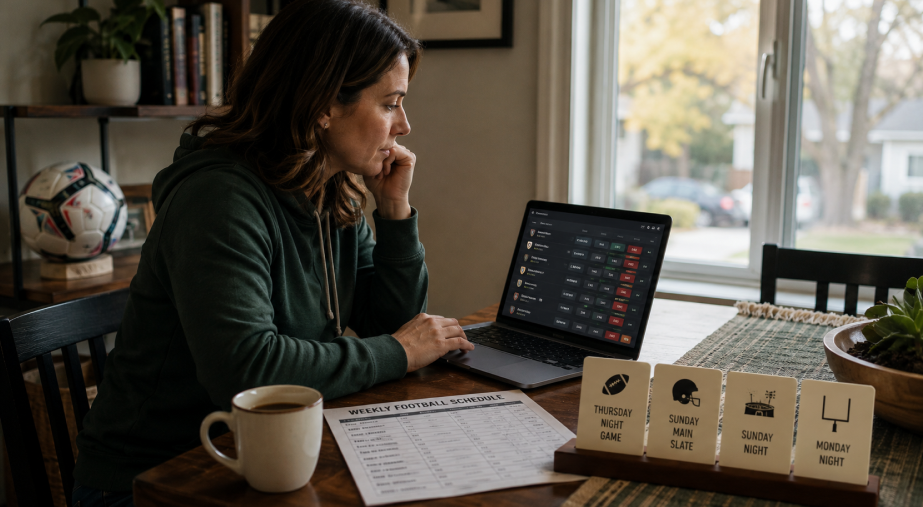
Thursday Night Football begins the major weekly cycle. Sunday brings the largest group of games. Sunday Night Football creates another national window, followed by Monday Night Football.
Then the process immediately begins again.
Injury reports emerge.
Quarterback participation becomes clearer.
Weather forecasts develop.
Opening prices change.
Division and playoff probabilities evolve.
That structure creates a potentially more valuable customer habit than a short tournament.
Someone who begins using prediction markets during Week 1 could potentially return for 17 more regular-season weeks before the playoffs even begin.
For prediction-market companies, retention could matter more than one month of record volume.
The World Cup proved that sports can generate trading.
The NFL will test whether sports can generate routine.
Kalshi Enters Football Season With Scale
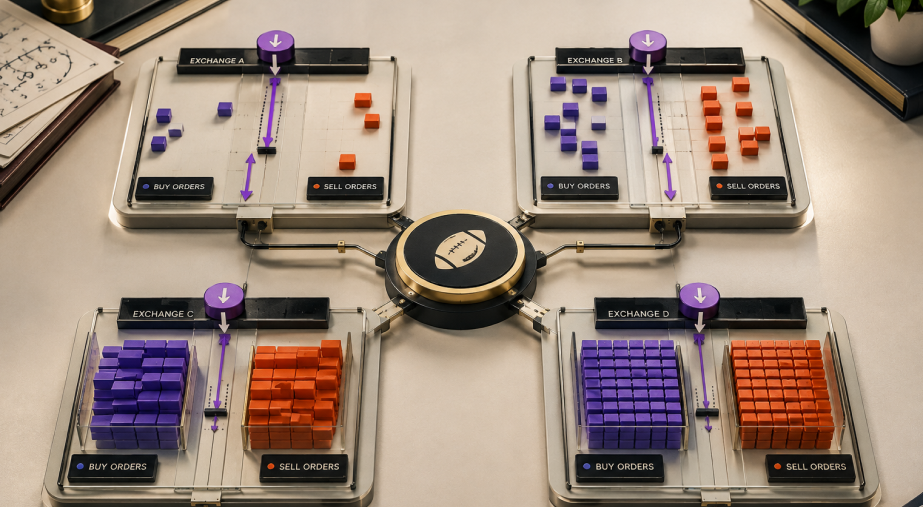
Kalshi enters the NFL season as one of the largest prediction-market platforms in the United States.
Its rapid expansion across sports has provided an important liquidity advantage.
Liquidity determines how easily traders can buy or sell contracts near the displayed price. A market can show a contract at 60 cents, but the usefulness of that number depends on how many contracts are actually available around that level.
Thin markets can move dramatically after relatively small orders.
Deeper markets are usually better able to absorb new activity without producing large price changes.
That becomes especially important during NFL games because information can change rapidly.
A quarterback injury can reshape a game market within minutes.
A weather forecast can affect totals.
A late inactive announcement can alter player-related markets and team probabilities simultaneously.
The platform capable of maintaining the deepest NFL markets may therefore have an important structural advantage.
Prediction-market competition is not simply about which company offers the most contracts.
It is about whether those contracts remain tradeable under real football volume.
Polymarket Is Increasing Its U.S. Presence
Polymarket approaches the NFL from a different position.
Its global platform has built enormous brand recognition around elections, financial events and major sports. The company’s U.S. strategy has expanded rapidly as well.
Football provides an opportunity to convert that international recognition into recurring American sports activity.
The company can offer markets extending beyond straightforward game winners.
Possible contract categories include division winners, conference champions, playoff qualification, Super Bowl outcomes and major roster events.
That broader inventory helps keep markets active between games.
A customer does not need to wait until Sunday afternoon to participate in an NFL-related contract.
A trade involving a player, a quarterback decision or a playoff-race development can create a market during the week.
This continuous event cycle is one reason the NFL could become particularly valuable to prediction-market platforms.
DraftKings and FanDuel Change the Competitive Structure
The largest difference between 2026 and earlier prediction-market expansion is the involvement of established sportsbook operators.
DraftKings and FanDuel are no longer simply watching Kalshi and Polymarket attract sports customers.
Both have moved into prediction markets themselves.
DraftKings has expanded DraftKings Predictions and developed its own exchange infrastructure. FanDuel Predicts is similarly designed to give customers access to event contracts alongside the company’s wider sports ecosystem.
The strategic importance is obvious.
Both companies already possess enormous databases of sports customers.
They understand NFL customer-acquisition patterns.
They operate technology designed around Sunday traffic spikes.
They maintain sophisticated sports-pricing systems.
And they have extensive experience communicating football markets to recreational users.
Prediction-market specialists have advantages of their own, particularly established exchange structures and trading-oriented customers.
The NFL will test which advantage proves more important.
Sportsbooks Are Preparing to Spend Aggressively
The competition may not remain limited to product design.
Marketing expenditure could increase substantially.
Front Office Sports reported that Penn Entertainment expects a particularly aggressive customer-acquisition environment during football season.
That includes both sportsbook competitors and prediction-market companies attempting to acquire the same sports audience.
Traditional sportsbook operators already spend heavily around NFL kickoff.
Promotional offers, media partnerships and advertising campaigns typically intensify in September.
Prediction markets add another category of competitor bidding for user attention.
That can raise acquisition costs across the industry.
The result may resemble earlier sportsbook-launch periods, when operators spent aggressively to establish market share in newly legalized states.
The difference in 2026 is that companies are also competing across different regulatory structures.
FanDuel Is Preparing Prediction Markets for Football
FanDuel parent Flutter Entertainment has explicitly identified the NFL as an important stage in the development of its prediction-market business.
The company has said customer activity is expected to become more heavily weighted toward the second half of 2026 as its prediction products mature and football begins.
Flutter has also discussed using its existing sports-pricing capabilities for market-making services.
That could become significant.
A prediction exchange depends on functioning prices.
Sportsbook operators already employ models capable of pricing thousands of events and correlated outcomes in real time.
If those capabilities are applied to prediction markets, the distinction between sportsbook technology and exchange technology could narrow considerably.
FanDuel’s existing customer interface creates another advantage.
A user who already knows how to navigate a sportsbook may find it easier to experiment with an event-contract product offered within a familiar ecosystem.
The NFL may therefore become a competition not only over prices but over customer experience.
DraftKings Is Building Its Own Exchange Infrastructure
DraftKings has taken an equally significant step.
The company launched proprietary exchange infrastructure in 2026, giving it greater control over its prediction-market product instead of relying entirely on third-party markets.
That matters because owning more of the exchange technology can influence liquidity management, contract design and product economics.
DraftKings can also connect prediction markets to an existing sports-focused customer base.
A football customer already understands concepts such as spreads, totals and championship probabilities.
The presentation changes when those views are expressed through contracts, but the fundamental sporting questions remain familiar.
Will Kansas City reach the playoffs?
Will Philadelphia win its division?
Will Buffalo reach the Super Bowl?
The market mechanism is different.
The underlying fan opinion is not.
Prediction Markets and Sportsbooks Are Moving Closer Together
This creates a particularly interesting situation for consumers.
Sportsbooks and prediction markets can offer exposure to nearly identical sporting outcomes through very different structures.
A sportsbook may post a traditional moneyline.
A prediction exchange may list yes-and-no contracts whose prices resemble percentages.
Both are attempting to price the same uncertainty.
That does not mean the prices should always match.
Sportsbooks include operator margin and manage liability.
Prediction exchanges depend on buyers, sellers, market depth and transaction costs.
A market showing a team at 62 cents does not automatically provide better value than sportsbook odds implying a similar probability.
The internal 1x2bettingpro.com analysis of sports prediction-market pricing examined why contract prices should not automatically be treated as perfect probabilities.
That distinction becomes increasingly important as customers gain more ways to express the same football opinion.
Official Sports Data Could Become a Competitive Advantage
Another important development is the growing connection between prediction markets and official sports-data providers.
Genius Sports has entered agreements involving major prediction platforms, giving these markets access to official sports information and integrity services.
The Genius Sports prediction-market agreements demonstrate how the industry is beginning to build infrastructure resembling the systems already supporting modern sportsbooks.
Official data matters for several reasons.
First, contracts need accurate settlement.
A disputed score, postponed game or player-stat correction can affect real financial positions.
Second, live data affects price speed.
A market receiving information faster can respond more efficiently to events on the field.
Third, data partnerships can support integrity monitoring.
Large NFL trading volumes will make surveillance increasingly important.
The NFL Raises Integrity Questions Prediction Markets Cannot Ignore
Football markets also involve significant amounts of nonpublic information.
Teams know injury status before the public does.
Coaches know whether a player will be active.
Medical staff may know the expected severity of an injury.
Players and personnel may know internal strategic decisions before journalists report them.
Most of that information exists for legitimate competitive reasons.
Once financial markets are built around the same events, however, confidential information can acquire additional economic value.
Prediction platforms need clear rules preventing people with relevant nonpublic information from using it improperly.
The NFL has already expressed concerns about prediction markets involving events that could be influenced or known by a small group of participants.
Those concerns will become more visible as football contract volume grows. The BBC shakes up its Match of the Day pundit line-up – will it work?
Regulation Could Limit the Arms Race
The prediction-market opportunity is large, but the regulatory environment remains unsettled.
Sports event contracts operate within a federal derivatives framework when listed by qualifying CFTC-regulated exchanges.
Several state regulators, however, have argued that certain sports contracts amount to gambling and should therefore fall under state gaming laws.
Courts have produced differing rulings.
That creates an unusual competitive environment.
Traditional sportsbooks operate under state licenses with clearly defined geographic boundaries.
Prediction exchanges have argued for broader federal authority, but continuing litigation could result in greater state-by-state restrictions.
That would affect one of prediction markets’ biggest strategic attractions: reaching sports customers in places where conventional online sportsbooks may not operate.
The arms race therefore has a legal dimension as well as a commercial one.
World Cup Volume Does Not Guarantee NFL Retention
One of the biggest risks is assuming that World Cup activity automatically becomes football activity.
Major tournaments create unusual behavior.
Customers who participate heavily during a global event may disappear when it ends.
The NFL needs to prove whether that audience can be retained.
Football has one major advantage.
The schedule encourages routine.
A user who trades the Sunday slate may return Thursday.
After Monday Night Football ends, futures and Week 2 markets are already developing.
That creates nearly continuous sports engagement.
But there is also a challenge.
The World Cup consolidated attention around one tournament.
The NFL fragments attention across hundreds of individual markets.
Liquidity can become spread across games, player outcomes, futures and live contracts.
Platforms need enough users to keep those markets functional. Read more about NFL here.
Super Bowl LXI Could Become the Ultimate Market Test
The regular season will provide months of evidence, but Super Bowl LXI could become the clearest comparison.
By February 2027, Kalshi, Polymarket, DraftKings Predictions and FanDuel Predicts will have had an entire football season to attract users and develop liquidity.
The championship game will concentrate interest.
That creates an opportunity to compare markets across several dimensions.
Trading volume will matter.
Market depth will matter.
Bid-ask spreads will matter.
Settlement reliability will matter.
Customer participation will matter.
The platform generating the largest headline volume will not necessarily produce the best market.
A deep, competitive market with stable execution may be more important than a larger nominal trading total.

The NFL Could Decide Whether Sports Prediction Markets Become Permanent
The World Cup proved that prediction markets can generate enormous sports activity.
The 2026 NFL season must prove something more difficult.
It must demonstrate whether that activity can become habitual.
Kalshi brings substantial existing liquidity.
Polymarket brings enormous brand recognition and growing U.S. ambition.
DraftKings brings one of America’s largest sportsbook customer bases and proprietary exchange infrastructure.
FanDuel brings similar sports scale along with increasingly integrated prediction-market products.
All four are moving toward the same football audience.
That creates a competitive environment unlike anything the U.S. sports market has seen before.
The question is no longer whether prediction markets can attract sports customers.
They already have.
The question is whether they can retain those customers across Thursday nights, Sunday afternoons, Monday nights and an entire NFL season while producing liquid, reliable and well-regulated markets.
If they can, prediction markets could become a permanent second pricing system alongside conventional sportsbooks.
If they cannot, the 2026 World Cup may look more like an extraordinary spike than the beginning of a new sports-market structure. NFL Preseason Is Becoming a Test of Prediction-Market Expansion.
The NFL will provide the evidence.