

College football does not need to play a snap before the market begins separating national contenders, rebuilding programs and teams that fall somewhere between the two.
With the first games of the 2026 season approaching, early point spreads already show enormous differences in how teams are being evaluated. USC is laying more than five touchdowns against San Jose State in Los Angeles. Florida State is around a 30-point favorite over New Mexico State. TCU is favored by roughly a touchdown against North Carolina in Dublin, while Virginia is giving approximately 5.5 points to NC State in Charlottesville.
The contrast is striking.
These are all season-opening games scheduled for August 29, yet their markets describe completely different competitive environments. Some are being treated as relatively balanced matchups. Others are priced as games in which an upset would require a major departure from preseason expectations.
That does not mean early lines are predictions of exact final scores. Nor does a 35-point favorite need to win by 35 points for the market’s underlying assessment of the teams to be reasonable.
Instead, these numbers offer an early look at how sportsbooks are attempting to convert returning production, transfer activity, quarterback situations, coaching, venue and uncertainty into one price before meaningful 2026 game data exists.
August 29 Provides an Unusual Opening Snapshot
The opening Saturday offers several useful examples because the games span such a wide range of expected competitiveness.
Current market snapshots have generally placed TCU around -6.5 to -7 against North Carolina, USC around -35.5 to -38.5 against San Jose State, Virginia approximately -5.5 against NC State, and Florida State roughly -30 to -31 against New Mexico State.
Those numbers remain subject to movement before kickoff.
| August 29 Matchup | Approximate Current Spread | Location |
|---|---|---|
| North Carolina vs. TCU | TCU -6.5 to -7 | Dublin, Ireland |
| San Jose State at USC | USC -35.5 to -38.5 | Los Angeles, California |
| NC State at Virginia | Virginia -5.5 | Charlottesville, Virginia |
| New Mexico State at Florida State | Florida State -30 to -31 | Tallahassee, Florida |
The range itself is the story.
USC and San Jose State are technically beginning the same season at 0-0, but the market is not treating the programs as remotely equal. Virginia and NC State, meanwhile, are separated by less than a touchdown.
Current college football odds also demonstrate why a single preseason number should never be treated as permanent. Different books can show slightly different spreads and totals, and those numbers can change as new information reaches the market.
August is price discovery.
By September, actual football begins replacing assumptions.
USC-San Jose State Shows the Largest Gap
Few opening-week games illustrate preseason expectations more clearly than San Jose State’s trip to USC.
The teams meet on August 29 at the Los Angeles Memorial Coliseum, with USC Athletics listing a noon Pacific kickoff on NBC.
The history between the programs strongly favors the Trojans.
USC is 6-0 all time against San Jose State in games played at the Coliseum. The most recent meeting came in 2023, when USC won 56-28. Previous meetings include USC victories of 30-7 in 2021 and 56-3 in 2009.
But history alone does not explain a spread above five touchdowns.
The current price is an assessment of the 2026 versions of the programs.
USC enters with established offensive production. The school’s game center lists quarterback Jayden Maiava with 3,711 passing yards from the previous season, running back King Miller with 972 rushing yards and receiver Makai Lemon with 1,156 receiving yards.
San Jose State, coached by Ken Niumatalolo, enters with a different set of expectations.
Recent reporting from Spartans camp has emphasized an offense attempting to combine its familiar spread passing concepts with greater rushing versatility. Offensive coordinator Craig Stutzmann remains central to that approach, while transfer receiver Jerry McClure is among the players generating attention.
The market nevertheless sees an enormous talent and depth difference.
USC being favored by roughly 36 points does not mean bookmakers expect every matchup within the game to favor the Trojans equally.
It means the combined assessment of those advantages has produced one of the largest opening-week spreads on the board.
A 36-Point Spread Is Not a Forecast of a 36-Point Victory
This distinction is important when reading college football markets.
A point spread is designed to create a price around a handicap, not publish a predicted final margin as if it were a weather forecast.
If USC closes -36.5, the market is essentially asking participants to choose between USC winning by 37 or more and San Jose State staying within 36 points, subject to the specific sportsbook’s rules.

That creates a very different analytical problem from simply asking who will win.
USC can dominate the game and still fail to cover a massive spread.
A late touchdown against reserve defenders can matter to the point spread without changing anything meaningful about which team was superior.
Large favorites also introduce coaching incentives that differ from close games.
Once a comfortable lead is established, a coach may remove important starters, shorten the playbook and prioritize keeping players healthy. The underdog may continue using its first-team offense against backups.
That is one reason enormous college football spreads should not be interpreted as guarantees of enormous final margins.
They represent a market price around uncertainty.
TCU-North Carolina Creates a Completely Different Problem
TCU and North Carolina offer a more balanced example.
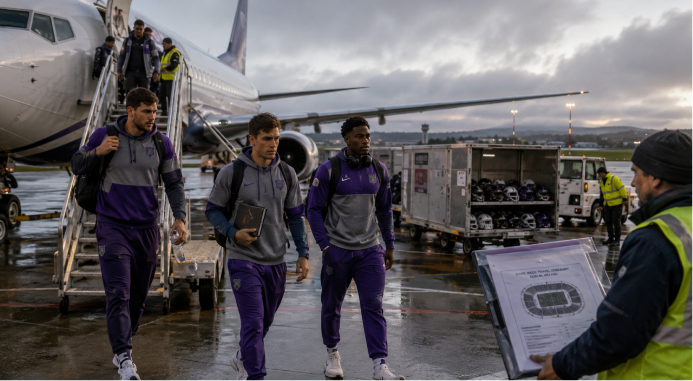
The programs will meet at Aviva Stadium in Dublin, Ireland, in the Aer Lingus College Football Classic. Official schedules from both universities list the game for August 29, with ESPN carrying the matchup.
The international venue removes one familiar factor from the normal college football calculation: a conventional home field.
TCU is technically listed as the home team, but this is not the same environment as playing in Fort Worth.
Travel becomes more important. Routine changes. Both teams need to manage an international trip before playing their first meaningful game of the season.
The market has generally installed TCU as approximately a touchdown favorite.
That is substantial, but it is nowhere near the gap between USC and San Jose State.
One reason the game is difficult to evaluate is the amount of new information surrounding both teams.
Recent camp reporting describes North Carolina operating with unusually limited public access under Bill Belichick, while the roster has experienced extensive turnover. TCU, coached by Sonny Dykes, has been more open during camp while also installing offensive changes.
Those differences create uncertainty that a point spread must somehow absorb.
The market cannot wait until September to learn exactly what each new system looks like.
It has to establish a price now.
Early Markets Have to Price What They Cannot See
This is one of the fundamental challenges of Week 0 and Week 1.
By November, analysts have months of current-season evidence.
They know how efficiently an offense moves the ball. They know whether an offensive line protects the quarterback. They know how frequently a defense generates pressure and whether a transfer quarterback has adapted successfully.
In August, much of that evidence does not exist.
Sportsbooks and market participants instead work from a combination of previous performance and projections.
Returning production matters.
Transfer-portal additions matter.
Recruiting talent matters.
Quarterback experience matters.
Coaching continuity matters.
But none of those variables perfectly reproduces what will happen once a new team actually plays together.
The first market therefore contains more model uncertainty than a comparable matchup in October. (Betting Apps and How to Use Them)
Virginia-NC State Shows How Location Can Change the Equation
NC State and Virginia provide an especially interesting example because the location itself changed.
The teams were originally scheduled to open the season in Rio de Janeiro, Brazil, as part of a planned international college football event.
That plan was abandoned in June.
Virginia Athletics confirmed that the game would instead be played at Scott Stadium in Charlottesville on August 29 at 3:30 p.m., with ESPN televising the matchup.
The NCAA Division I Football Bowl Subdivision Oversight Committee subsequently approved a waiver allowing the game to remain on August 29.
The change matters because a neutral-site international game became a Virginia home game.
The official Virginia announcement also notes that the Cavaliers are coming off an 11-win 2025 season, the most victories in program history, and a TaxSlayer Gator Bowl victory over Missouri.
Current markets have Virginia favored by roughly 5.5 points.
That is precisely the kind of matchup where venue, offseason personnel changes and updated team strength must be separated carefully.
The teams did not suddenly change because the game moved from Brazil to Virginia.
The environment did.
Markets need to price both.
The First Number and the Closing Number Tell Different Stories
An opening line is an initial estimate.
A closing line is the product of everything that happened between the market opening and kickoff.
That period can contain substantial information.
A quarterback competition may be resolved.
An offensive lineman may be injured.
A transfer may win a starting position.
A coach may reveal that a player previously expected to participate will be unavailable.
Weather forecasts become useful.
Market participants also express opinions through actual wagering, which can force sportsbooks to reassess whether their original number remains appropriate.
That means the movement itself can contain information.
If TCU opens -6.5 and eventually moves materially higher, the important analytical question is not simply that “people are betting TCU.”
The better question is what changed.
Was there new roster information?
Did multiple sportsbooks move simultaneously?
Was the opening number simply viewed as too low?
Or did one influential market move and others follow?
Not every line move has one identifiable explanation.
Quarterback Certainty Has Outsized Value in August
No position illustrates preseason uncertainty better than quarterback.
An established returning starter gives a model considerably more information than a new transfer or an unresolved competition.
The effect extends beyond passing statistics.
Quarterback changes influence sack rates, rushing usage, receiver expectations, third-down efficiency and potentially the entire offensive structure.
A new quarterback can also change how quickly a team wants to play.
That matters for totals.
A faster offense creates more possessions. More possessions generally create more opportunities for scoring, but also more opportunities for turnovers and defensive points.
A slower team may deliberately reduce possession count against a superior opponent.
Those differences can matter enormously when the market is trying to price teams that have not yet produced 2026 data.
This is also why August injury and depth-chart information deserves context rather than an automatic reaction. The same principle discussed in 1x2bettingpro.com’s analysis of NFL training camp injuries and futures applies to college football: the significance of an absence depends on position, replacement quality and how much of that uncertainty was already reflected in the price.
Florida State-New Mexico State Shows How Markets Price a Talent Gap
Another August 29 market has Florida State favored by roughly 30 points against New Mexico State.
That is not quite the USC-San Jose State gap, but it belongs to the same general category.
When spreads reach this range, the market is expressing a very strong opinion about the relative quality of the teams.
The favorite is expected to control enough phases of the game that an ordinary performance should create a large advantage.
But these matchups also show why moneyline probability and point-spread probability should not be confused.
A team can have an extremely high probability of winning outright while having a much less overwhelming probability of covering 30 points.
The difference matters.
Winning requires finishing with at least one more point.
Covering a massive spread requires continuing to create separation after the game may already be competitively decided.
Those are different objectives.
Transfers Make Historical Ratings Less Stable
The transfer portal has made preseason college football modeling more difficult.
A program’s name remains the same while a meaningful percentage of its roster can change in one offseason.
Returning-team statistics therefore need interpretation.
If an offense loses its quarterback, top receiver and multiple offensive linemen, last season’s scoring average does not describe the same personnel.
The reverse can also happen.
A struggling team can import an experienced quarterback and several starters through the portal, making last year’s record less predictive.
This creates an interesting tension in early markets.
Historical program strength remains relevant because recruiting, coaching resources and depth do not disappear overnight.
But roster continuity has become less dependable.
That increases the importance of evaluating individual personnel rather than relying solely on the logo on the helmet.

Huge Spreads Can Reveal Depth as Much as Star Power
The biggest differences between programs are not always found among their best 11 players.
Depth matters.
A heavily favored program may replace an injured four-star player with another highly recruited athlete.
A smaller program may experience a much larger decline between its starter and backup.
Over four quarters, those differences accumulate.
Defensive lines rotate.
Receivers substitute.
Special teams require players from deeper on the roster.
Fatigue creates additional snaps for backups.
That is one reason a market can create an enormous spread even when an underdog has several individual players capable of competing with the favorite.
The question is not whether San Jose State has talented football players.
It clearly does.
The market is evaluating the complete roster against USC’s complete roster, while also incorporating venue, coaching and expected game conditions.
Market Consensus Is More Useful Than One Isolated Price
College football odds vary between sportsbooks.
A half-point difference is normal.
Sometimes the disagreement becomes larger.
That is why one screenshot from one operator should not automatically be treated as “the market.”
The more useful approach is to compare several reputable prices and identify the approximate consensus.
Current listings, for example, have shown USC in a range around the mid-to-high 30s against San Jose State rather than one universally fixed spread.
That difference matters.
A market at -35.5 is not identical to -38.5.
The underlying conclusion—USC is an enormous favorite—remains the same, but the price required to take a position has changed materially.
This is particularly important before the season because markets may be less settled than they become closer to kickoff.
Week 1 Will Begin Replacing Projection With Evidence
The most valuable information from these opening games may arrive after they are over.
If USC dominates San Jose State, the result will need to be compared with expectations rather than viewed in isolation.
If TCU beats North Carolina by seven, that does not necessarily reveal that the Horned Frogs dramatically exceeded the market’s assessment.
If Virginia wins comfortably against NC State, analysts will need to determine whether the result came from sustainable strengths or a handful of high-variance plays.
One game is still a small sample.
But it is a better sample than zero games.
Week by week, 2026 statistics will gradually replace preseason assumptions.
Quarterback projections become actual passing data.
Offensive-line concerns become pressure rates.
Transfer speculation becomes on-field production.
By midseason, many of the questions embedded in August prices will have answers.
Early College Football Lines Are Maps of Uncertainty
The opening 2026 college football markets already tell us which games sportsbooks believe contain major competitive gaps.
USC-San Jose State sits at one extreme.
TCU-North Carolina and Virginia-NC State are much closer.
Florida State-New Mexico State provides another example of a major favorite facing an opponent the market considers substantially weaker.
But those spreads are more useful as starting points than predictions.
They reveal how current information is being valued before the season begins.
The coming days can still change that information.
Depth charts will become clearer. Quarterback decisions will be finalized. Injuries will emerge or resolve. Market participants will challenge numbers they believe are too high or too low.
Then, on August 29, projections finally encounter actual football.
That is what makes the opening market valuable analytically.
A 36-point spread does not tell us exactly what USC will do against San Jose State. A 6.5-point spread does not tell us exactly how TCU and North Carolina will perform in Dublin.
They tell us how far apart those teams appear before anyone has 2026 game evidence.
The differences between those early expectations and what happens on the field will provide the first real information for pricing the rest of the season. (United States Scores & Fixtures)