

The mandatory hydration breaks used throughout the 2026 FIFA World Cup created a new variable for anyone analyzing live soccer markets.
Every match included a three-minute stoppage near the 22nd minute of each half, regardless of temperature, humidity, venue design or whether the stadium was climate-controlled. Players could drink, recover and receive tactical instructions while live-betting markets adjusted to the score, match clock and available performance data.
The breaks quickly generated a compelling narrative. When an attacking team lost control after the stoppage, commentators and bettors often described the pause as a momentum killer. When a coach made a visible tactical adjustment, the same interval was treated as an unofficial timeout capable of changing the match.
Research published after the tournament provides a more cautious answer. Hydration breaks may interrupt visible pressure, but the available evidence does not show that they consistently changed underlying match momentum or produced a dependable live-betting signal.
That distinction matters. A pause can alter how a match feels without creating a repeatable pricing advantage.
FIFA Introduced the Breaks in Every Match
FIFA announced before the tournament that referees would stop play approximately 22 minutes into each half for a three-minute hydration break. The policy applied to every fixture, with no temperature threshold.
According to FIFA, the standardized approach was intended to protect player welfare and give every team the same conditions. Manolo Zubiria, FIFA’s chief tournament officer for the United States, explained that the break would occur in every game regardless of location, roof configuration or temperature. (FIFA’s hydration-break protocol)
The policy represented a change from previous competitions, where cooling or drinks breaks were generally linked to environmental conditions. At the 2025 FIFA Club World Cup in the United States, hydration breaks were used in approximately 60% of matches, according to FIFA President Gianni Infantino. For the 2026 World Cup, the stoppage became universal.
That consistency made the tournament unusually useful for analysis. Researchers did not need to compare a small number of exceptionally hot matches with ordinary fixtures. The same scheduled intervention occurred twice in nearly every game.
It also created a predictable point in live-betting markets. Bettors knew before kickoff that play would pause near the middle of each half.
Why Bettors Believed Momentum Was Changing
Soccer does not contain the regular tactical timeouts found in basketball or American football. A team can sustain pressure for several minutes without a formal interruption, forcing the opponent to defend continuously.
A hydration break changes that rhythm.
Players leave their positions, move toward the touchline and communicate with coaches. Defenders have time to reorganize. A team under pressure can recover physically and mentally. The attacking side must then recreate its territorial advantage after several minutes without active play.
This sequence makes the momentum-killer theory intuitively attractive.
During the group stage, individual matches appeared to support it. In the Netherlands’ 5-1 victory over Sweden, the Netherlands produced four shots and approximately 1.34 expected goals before the first hydration break, while Sweden had one shot worth roughly 0.03 expected goals. After the stoppage, Sweden changed shape and outshot the Netherlands eight to one before halftime. (Opta’s World Cup momentum analysis)
That was a real tactical change, but one match cannot establish a general rule. Coaches adjust formations, players fatigue and dominant spells often end naturally. The analytical question is not whether momentum changed after some breaks. It is whether momentum changed more than it normally would have without the stoppage.
The Main Study Found a Small, Uncertain Effect
A research paper published on July 22, 2026, examined whether the mandatory breaks altered match momentum. Debangan Dey used a within-match case-crossover design, comparing post-break periods with control periods from the same matches.
The study analyzed 99 World Cup matches and controlled for game time, scoreline and the team’s momentum before the break. This design was intended to reduce the influence of differences in team quality, venue, tactical style and other match-level factors. (World Cup hydration-break study)
The central finding was that the apparent post-break decline was not clearly caused by the stoppage.
Teams controlling a match often lost some of their advantage after the hydration break. However, the same teams also experienced similar declines after comparable periods when no break occurred. In statistical terms, much of the apparent momentum loss looked like regression toward the mean rather than a direct break effect.
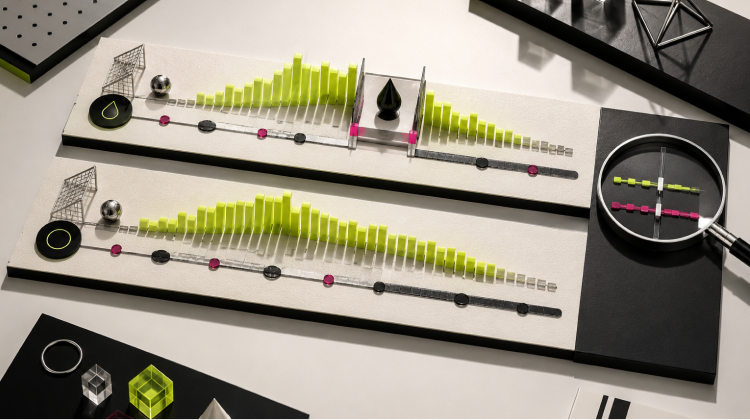
A team producing an unusually intense spell of pressure is unlikely to maintain that level indefinitely. Even without an interruption, possession, field position and attacking output tend to move back toward more typical levels.
The study estimated that the average additional effect attributable to the break was small and close to zero. The sample was not large enough to exclude every modest effect, and some match-state differences remained possible. For example, the model suggested that a comfortably leading team might experience a slightly larger decline, but the researcher described that result as exploratory and in need of replication.
The responsible interpretation is not that hydration breaks never matter. It is that the tournament data did not establish a large, universal momentum effect.
A Final Tournament Dataset Reached a Similar Result
A related final analysis used data from all 104 matches and 513 stoppages.
In that dataset, a team holding the momentum advantage lost an average of approximately 22 momentum points during the five minutes following a hydration break. On the surface, that looks substantial.
The important comparison is what happened at similar moments without a break. The same types of teams lost approximately 17 momentum points after ordinary control periods. Once that natural decline was considered, the estimated difference associated with the stoppage was only about three points, with an uncertainty range that included no effect. (Full World Cup stoppage analysis)
| Measurement | Average Momentum Change |
|---|---|
| After hydration breaks | Approximately –22 points |
| After comparable no-break periods | Approximately –17 points |
| Estimated additional break effect | Approximately –3 points |
| Overall interpretation | Small and not clearly distinguishable from noise |
The numbers explain why raw before-and-after comparisons can mislead live bettors.
Looking only at the 22-point decline would make the breaks appear highly influential. Comparing that decline with what dominant teams normally experience produces a much weaker result.
This is an example of selection bias. Hydration breaks often occur while one side happens to be performing above its normal level. Measuring what follows without asking what would have happened anyway can exaggerate the apparent effect.
Momentum Is Not the Same as Scoring Probability
Live betting platforms continuously update prices using the score, time remaining, player availability and performance data. Some models also incorporate possession, shots, territory, expected goals and attacking sequences.
These indicators can describe which team is applying pressure, but they do not guarantee that a goal is imminent.
A team may dominate possession without creating high-quality chances. Another may appear passive while remaining dangerous on counterattacks. A hydration break can interrupt attacks without materially changing the expected final result.
The July study found that the pause removed the continuation of pressure during the minutes when play was stopped, but that loss did not leave a clear effect on net expected goals.
That finding is particularly relevant to live total-goals and next-goal markets. A bettor might observe that an attacking team has lost rhythm after the break and immediately assume that the probability of another goal has fallen. The available evidence does not support applying that assumption mechanically.
Readers can compare that distinction with the site’s analysis of momentum and expected value, which explains why emotionally convincing game narratives may already be reflected—or overrepresented—in the market price.
Live Markets Already React to the Break
Even when a hydration break does not change underlying probabilities, the live market may still move.
The match clock continues to influence prices, while some sportsbooks temporarily suspend markets during the stoppage. When wagering reopens, models may incorporate the score, remaining time, player data and events immediately preceding the pause.
Public bettors can add another layer. If viewers collectively believe a dominant team has lost momentum, they may shift their wagers toward the opponent, the draw or a lower-scoring outcome. That behavior can affect prices even when the statistical evidence for a break effect is weak.
This creates two different questions:
- Did the break change the match?
- Did the break change how the market priced the match?
The answers do not have to be the same.
Market prices respond to information and customer demand. A visible coaching discussion or tactical substitution can produce a justified adjustment. A broad emotional reaction to an interruption may produce an exaggerated one.
However, identifying an exaggerated move requires more than observing that the odds changed. Bettors would need a defensible probability estimate showing that the new price moved farther than the available information warranted.
Coaches Used the Breaks as Tactical Timeouts
Although FIFA presented hydration breaks as a player-welfare measure, coaches naturally used them to communicate.
The pause allowed managers to adjust defensive shape, clarify pressing instructions and address problems that might otherwise have continued until halftime. Players could also exchange information and recover concentration.
That tactical use does not contradict the study. An intervention can matter in a specific match without producing a stable average effect across an entire tournament.

Some coaches will make effective adjustments. Others will change little. Both teams receive the same opportunity, and the stronger tactical response may depend on the score, personnel and problems visible at that moment.
The break may be most relevant when there is a clear reason for an adjustment:
- A fullback is repeatedly being isolated.
- A team’s press is being bypassed through the same passing route.
- A midfielder is struggling with an injury or booking.
- Extreme heat is visibly reducing the match’s intensity.
- A coach changes the formation or prepares a substitution.
Those are match-specific developments. Treating every hydration break as an automatic turning point ignores the information that actually differentiates one game from another.
Weather Complicated the Debate
The player-welfare argument remained important throughout the tournament.
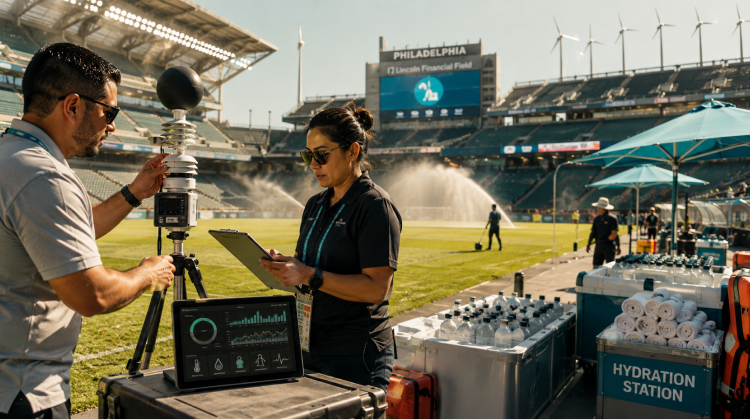
A Guardian analysis found that nearly one in five World Cup matches reached heat and humidity levels at which FIFPRO guidance recommends considering delays or postponements. The hottest outdoor fixture identified in the analysis was France against Paraguay in Philadelphia, where the estimated wet-bulb globe temperature reached approximately 33.9 degrees Celsius. (World Cup heat analysis)
At the same time, many matches took place below the conditions normally associated with a cooling break. Some were held in climate-controlled stadiums in Atlanta, Dallas and Houston.
This created two separate policy debates. One concerned whether scheduled breaks affected sporting flow. The other concerned whether a universal three-minute pause was sufficient for player safety during extreme heat.
Health specialists cited by the Associated Press questioned whether three minutes provided enough time for meaningful cooling in dangerous conditions. Some argued that a longer intervention, including access to cold towels and other cooling methods, would offer greater protection. (Player-welfare debate over hydration breaks)
For live-betting analysis, the weather itself may matter more than the break. Heat can affect pressing intensity, recovery speed, fatigue and substitution patterns across the entire match. A three-minute pause is only one part of that broader physical environment.
The Breaks Did Not Produce a Simple Betting Rule
The research does not support a universal strategy such as automatically opposing the dominant team after the 22nd or 67th minute.
That approach would assume that the break creates a consistent effect and that sportsbooks fail to price it correctly. Neither condition has been demonstrated.
The stoppage was known before the tournament, occurred at predictable times and was visible to every operator. Sportsbook models could account for the lost playing time and update markets when play resumed. Traders also had an entire tournament to observe how teams used the interval.
Any useful live-betting assessment would need to consider the specific match rather than the existence of the break alone. Relevant variables include the score, red cards, substitutions, tactical changes, weather, shot quality and the prices available after the market reopens.
The study also examined only one tournament under a new protocol. Its findings may not transfer perfectly to domestic leagues, different break lengths or competitions where stoppages occur only in extreme heat.
FIFA Is Still Evaluating the Policy
Before the World Cup final between Spain and Argentina at New York New Jersey Stadium, Arsène Wenger, FIFA’s chief of global football development, said the organization had not found evidence that hydration breaks affected match results or disrupted play in a systematic way.
Wenger also said FIFA would review the policy after the tournament before deciding whether it should be used in future competitions. (FIFA’s post-tournament review)
That review will likely include player welfare, match flow, coaching behavior, broadcast operations and environmental conditions. The final decision may not depend solely on statistical momentum.
For sportsbooks and live bettors, the 2026 tournament has already provided a useful case study. A highly visible interruption can create a strong narrative before the evidence establishes a corresponding market effect.
Hydration breaks clearly stopped play. They gave players time to recover and coaches time to communicate. In individual matches, they sometimes preceded obvious tactical changes.
What they did not create was a reliable, tournament-wide momentum reversal.
The strongest available analysis suggests that teams controlling matches often cooled off because extreme pressure naturally declines. The hydration break accounted for only a small additional difference, and that difference could not be clearly separated from statistical noise.
For live-betting decisions, the lesson is not to ignore the stoppage. It is to treat it as context rather than a signal by itself. The score, tactical response, physical conditions and revised odds remain more informative than the simple belief that a break always changes momentum.