

West Virginia’s regulated gaming market produced another billion-dollar fiscal year, but the most important development was not simply the final total. Digital products are becoming increasingly important to how the state generates gaming revenue, collects taxes and maintains relationships with players.
On July 29, 2026, the West Virginia Lottery reported more than $1.33 billion in gross revenue for fiscal year 2026, which ended June 30. That performance generated $582.9 million in revenue for the state and marked the sixth consecutive fiscal year in which the Lottery surpassed $1 billion.
The agency identified iGaming and iLottery as its largest areas of growth. That distinction matters because these products operate differently, face different regulatory requirements and should not be treated as interchangeable. Together, however, their expansion shows how mobile access is altering a state gaming system once centered on casinos, retailers and physical tickets.
The $1.33 Billion Total Covers More Than Online Casinos
West Virginia’s $1.33 billion figure represents gross revenue from the broader Lottery system. It does not mean that online casinos independently produced $1.33 billion or transferred that amount to the state.
The statewide total encompasses several regulated segments, including traditional lottery products, limited video lottery, racetrack gaming, iLottery and licensed online casino activity. The West Virginia Lottery said fiscal year 2026 revenue exceeded the previous year by $58 million.
Acting Director David Bradley described it as the sixth straight billion-dollar year. The agency has now passed that threshold in 24 of the past 25 fiscal years, with 2020 being the only exception.
More than $600 million was directed toward state-supported purposes involving education, tourism, seniors and veterans. Those transfers demonstrate why policymakers pay close attention to changes in the mix of gaming revenue. When a growing percentage comes through digital channels, technology and compliance become part of the state-finance discussion.
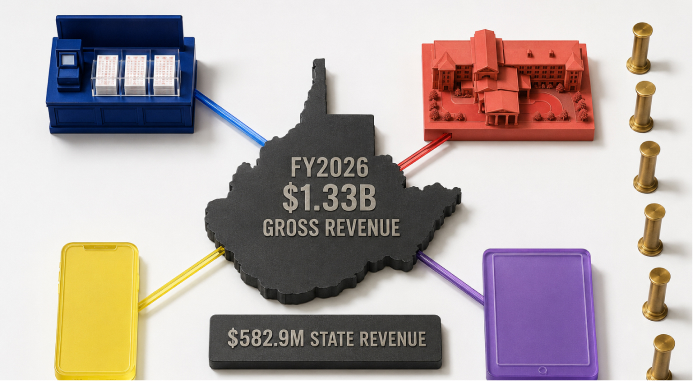
The results also require careful terminology. West Virginia’s iLottery platform offers digital lottery products, while iGaming refers to licensed online casino games. Both are delivered through connected devices, but they operate under separate rules and produce revenue through different player experiences.
Why iGaming Has Become A Significant Revenue Channel
West Virginia authorized interactive wagering in 2019, making it one of the relatively small number of U.S. jurisdictions with regulated real-money online casino gaming. Players physically located within the state can access licensed platforms offering digital slots and table games, subject to age, identity and location controls.
The market gives casino licensees a way to reach users outside their physical properties. A resident in Charleston, Morgantown or Wheeling does not need to travel to a casino floor every time they want to access a regulated game. That convenience creates a recurring digital channel rather than one dependent on casino visits.
Online casino activity can also continue throughout periods when retail traffic is affected by travel patterns, weather or operating schedules. Unlike sports wagering, it is not tied to a league calendar or the availability of major events. Digital slots and table games remain accessible throughout the year, which may make iGaming revenue more consistent.
A similar pattern is visible in other regulated markets. As examined in gclubgod.com’s report on how online slots drove Pennsylvania’s $249 million iGaming month, casino apps can generate substantial recurring revenue even when individual product categories move in different directions.
West Virginia operates on a smaller scale than Pennsylvania, Michigan or New Jersey. Its performance nevertheless demonstrates that a state does not need a large population to establish a meaningful regulated online casino market.
A 15% Tax Connects Digital Activity To State Revenue
West Virginia does not receive the full amount that players spend or operators report as gaming revenue. The state applies a defined tax to adjusted gross interactive wagering receipts.
Under Section 29-22E-16 of the West Virginia Code, licensed interactive-wagering operators pay a 15% privilege tax on adjusted gross receipts. Payments and operator reports are submitted weekly to the Lottery Commission.
That structure creates a direct relationship between regulated iGaming activity and public revenue. When adjusted operator receipts rise, the amount collected under the 15% assessment generally rises with them.
However, gross revenue, adjusted gross receipts, taxes and state transfers are separate measurements. They should not be combined or presented as though they describe the same pool of money.
Gross gaming revenue generally reflects wagers retained after winnings are paid, while adjusted receipts can account for deductions permitted under state rules. The state then applies its tax to the adjusted amount. Administrative expenses and statutory distribution rules further affect how collected funds ultimately move through government accounts.
This distinction is especially important when comparing West Virginia with other states. A jurisdiction with a larger headline revenue figure may use a different tax rate, promotional-deduction policy or accounting system. Direct comparisons require more than placing monthly totals side by side.
Mobile Access Changes What The Regulator Must Oversee
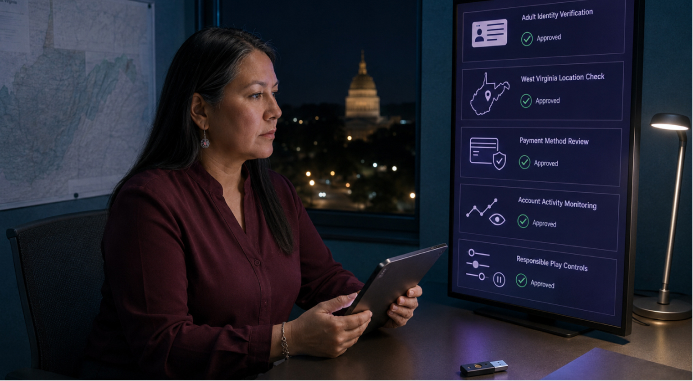
The growth of iGaming expands the West Virginia Lottery’s role beyond auditing physical casino equipment and monitoring licensed properties. Digital gaming requires continuous oversight of software, payments, accounts and user location.
A regulated online casino must determine whether a customer meets the minimum age requirement and is physically present in an authorized jurisdiction. It must also protect financial information, monitor account activity and maintain reliable records of deposits, withdrawals, wagers and results.
Those systems can influence consumer confidence as much as the games themselves. A large game catalog has limited value if users encounter unclear withdrawal procedures, weak security or confusing account controls.
Operators must therefore compete through more than game quantity. The quality of navigation, payment processing, customer support and responsible-gambling features can all affect how players evaluate a platform.
Digital growth also increases the importance of distinguishing licensed services from offshore or imitation sites. An interface can look professional without providing the regulatory protections associated with a West Virginia license. Users should verify a platform’s status and review the rules that apply where they are located.
iLottery Adds Another Layer To The Digital Shift
The West Virginia Lottery also credited iLottery with significant fiscal-year growth. Its iPLAY system allows eligible users to access digital instant games and certain lottery services through the official platform.
Although iLottery and online casino gaming both use mobile technology, their product structures differ. iLottery remains part of the state lottery system, while commercial iGaming is offered through approved casino licensees and their platform partners.
For the state, the expansion of both channels creates a broader digital relationship with consumers. Account registration, identity verification, geolocation and electronic payment systems become central parts of the experience.
That transition may also affect retail partners. Mobile products provide convenience, but physical retailers continue to distribute scratch-offs and draw-game tickets. The challenge is to develop digital channels without assuming that every player wants the same form of access.
A balanced system can treat mobile and retail products as complementary. Digital platforms may reach users who prefer account-based play, while stores remain important for cash purchases, ticket validation and community-level distribution.
Revenue Growth Increases The Need For Player Protections
A larger digital market creates more regulatory responsibility. Online access eliminates travel time and places casino-style games on devices that users may carry throughout the day.
That convenience makes account controls particularly important. Deposit limits, spending limits, session reminders, cooling-off periods and self-exclusion should be easy to find and understand. These features should not be hidden behind promotional content or complicated menus.
West Virginia provides complaint and self-exclusion resources through the Lottery, while its online safety guidance advises users to verify official services, protect account credentials and watch for scams or imitation websites.
Operators also have an interest in building effective protections. Strong identity and geolocation controls help reduce underage access, account misuse and activity outside approved boundaries. Clear payment records and accessible support channels can make disputes easier to investigate.
Revenue growth should therefore be evaluated alongside the strength of the systems surrounding it. A successful regulated market is not defined only by how much it collects. It also depends on whether users receive transparent rules, secure payments, reliable withdrawals and meaningful options for controlling their activity.

West Virginia’s Digital Market Is Becoming A Fiscal Policy Issue
West Virginia’s $1.33 billion fiscal year illustrates how gaming revenue is evolving. Traditional lottery products and physical casino operations remain significant, but iGaming and iLottery are now important growth drivers rather than experimental additions.
That shift changes the questions policymakers and regulators must consider. Revenue stability must be weighed against enforcement costs, cybersecurity requirements, responsible-gambling obligations and the need to distinguish licensed platforms from unregulated alternatives.
It also means future state reports should be read beyond the headline total. The most useful analysis will examine which channels produced the growth, how much reached the state, what tax rules applied and whether consumer protections expanded at the same pace.
West Virginia’s experience suggests that digital casino and lottery products can become meaningful contributors even in a relatively small market. Their long-term value, however, will depend on disciplined regulation and transparent reporting—not merely another record revenue year. Prediction Markets Hit Record July Volume, but the World Cup Distorted the Numbers.