

Forget the final score for a second. The real action is in the individual battles within the game. You’re not just watching a team win or lose; you’re watching the micro-battles, the stat lines, the individual brilliance. This is the world of NBA player props.
Forget the point spread. This is about a single player’s performance. A player prop is a wager on a specific in-game action by a specific athlete. It’s a direct challenge to your knowledge of the game and the player.
You’re not betting on a team to win or lose. You’re betting on a single human, with all their pre-game rituals and avocado toast, to hit a specific statistical mark. Will the star guard sink over or under 24.5 points? Will the center grab more than 10.5 rebounds? This is the sharp end of sports betting, where your insight into a player’s recent form, matchup, and even the night’s vibe can give you an edge over the sportsbook’s algorithm.
It’s a direct contest: your analysis versus the bookmaker’s algorithm. You, armed with knowledge of a player’s home/away splits or a team’s defensive rating, against their cold, calculating probability models. For a deeper dive into the types and strategies for NBA player, the nuances can turn a casual fan into a sharp bettor.
Usage rate and minutes projections
Think of an NBA offense like a corporate budget. There’s only so much capital—in this case, possessions—to go around. You wouldn’t invest in a company without scrutinizing its cash flow. So why would you bet on a player without checking his share of the offensive pie? This isn’t about fandom; it’s forensic accounting with a basketball.
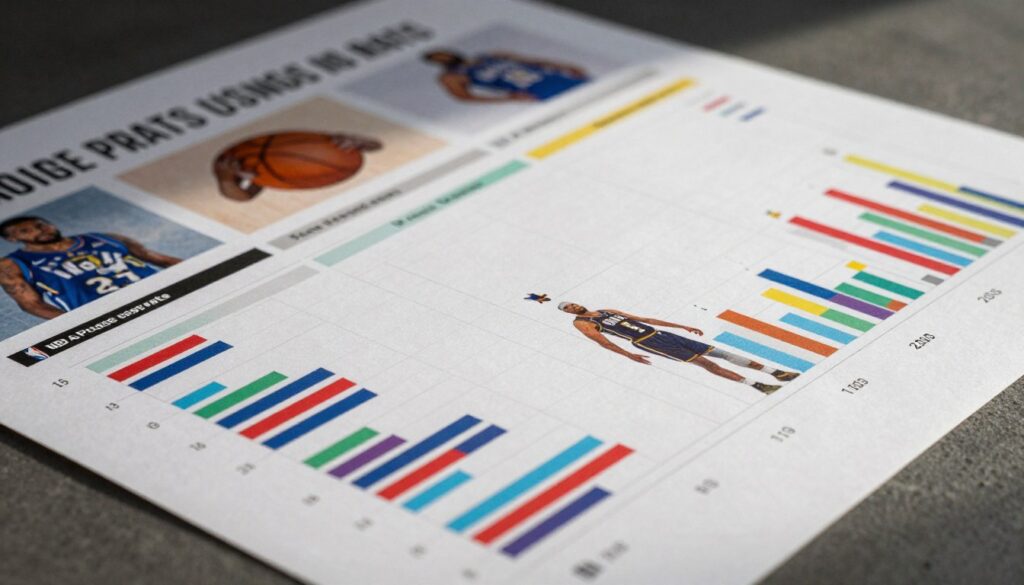
You’re not just betting on a player; you’re investing in his role within the team’s economic system. The usage rate is your P&L statement—it tells you what percentage of a team’s plays a player is responsible for when he’s on the floor. A high-usage player is a company with massive revenue streams. A low-usage player is a cost center, quietly doing his job without the ball. Your first question for any prop should be: is this guy a shareholder or an employee?
The Engine of Offense: Usage Rate and Your Bankroll
Imagine a player with a 35% usage rate. That means when he’s on the floor, over a third of the team’s plays end with him shooting, getting to the line, or turning the ball over. He is the offense. Guys like Luka Dončić or Giannis Antetokounmpo don’t just have a high usage rate; they are the usage rate. Betting the over on their points prop isn’t a bet on a hot hand—it’s a bet on a system that is legally, contractually, and strategically obligated to run through them.
But here’s the catch, the dirty little secret of the NBA player props world: usage rate without minutes is a sports car with no gas. A player with a 40% usage rate who only plays 20 minutes is a fantasy. The real magic happens when you cross-reference usage with projected minutes. This is where you move from a casual observer to a sharp. You’re not just looking at a number; you’re auditing the game script before the ball is even tipped.
The Math of Opportunity
Let’s do the math. A player with a 30% usage rate in a game with 100 possessions gets 30 “touches” in the offense. If he plays 36 minutes in a 100-possession game, that’s a lot of opportunity. But if that same player is on a minutes restriction and only plays 24 minutes, that’s a 33% reduction in his opportunity to produce. That’s not a hunch; it’s a quantifiable disadvantage. This is where you leverage data from sources like advanced NBA simulations to see how a player’s projected minutes mesh with his usage to forecast a realistic stat line.
So, before you lock in that over on points or assists, ask yourself two questions: Is this player the engine, or just a passenger? And is the coach giving him enough minutes to actually drive? The answers are the difference between a smart play and a donation to the sportsbook.
Matchup and defensive assignments
So, you’ve checked the usage rates and minutes projections. You’ve found a player prop that looks promising. But, the truth is, a player’s stats can be greatly influenced by their defender. A player like Jrue Holiday or a shot-blocker like Anthony Davis can change everything. Betting on a player is also betting on the matchup.
The real game starts with the defensive assignments. A player’s performance can change based on who they face. Ignoring this is like betting without knowing the conditions.
The Chess Match: When Your Stud Meets a Wall
Imagine betting on Jayson Tatum’s points. The odds look good. But, if Mikal Bridges is playing, it’s a different story. Bridges is known for his defensive skills. This changes everything.
The defensive rating of a team is just the beginning. The real value lies in the individual matchup matrix. Does your player thrive against a certain defender? Or will they struggle against a team’s strategy?
The Individual Matchup Matrix
This is your guide to winning at NBA player props. Think like a coach, not just a bettor. Here’s what to look at:
- The On-Ball Defender: Is it a “stopper” like Matisse Thybulle or Alex Caruso, whose sole purpose is to disrupt? Or is it a weaker defender your scorer can exploit?
- Defensive Scheme: Does the defense switch everything, creating mismatches? Do they blitz the pick-and-roll, or do they drop their big man, leaving the mid-range open?
- Historical Data: How has your target player performed against this specific defender or team in the past? Some players just have another’s number.
- Help Defense & Rim Protection: Even if the primary defender is beat, is a shot-blocking presence like Rudy Gobert or Evan Mobley waiting at the rim to erase a guard’s drive?
A drop-coverage defense might favor a center’s floaters and short jumpers. But against a team that switches hard, that same big man might struggle. The defensive assignment can change, too. A coach might switch at halftime. Your bet needs to account for this.
The individual matchup is where you find the real edge. The public bets based on names and averages. You, with your matchup matrix, see the details. That’s where you get ahead, not in the numbers but in the game itself.
Market inefficiencies
Underneath the surface of sportsbook odds, sharp bettors find their edge. The lines aren’t divine prophecies but probabilities with a profit margin. Sportsbooks are smart but not all-knowing. Their models are educated guesses, not absolute truths.
The real challenge isn’t beating the house but finding its weak spots. It’s about spotting where the house left the door open.
The House Always Has an Edge, But the Cracks Exist
The house always has an edge, thanks to the vig or juice. This 4-5% commission ensures the sportsbook makes money, win or lose. It’s the price of playing.
But this edge isn’t the same everywhere. It’s strong for big props like LeBron James’s points. The betting is huge, the models precise, and the lines tight.
Yet, the house’s defenses have weak spots. These inefficiencies hide in the shadows, not in the big games. They’re in the secondary props, late-night games, and props with lower limits.
The sportsbook’s model can’t always predict everything. It can’t account for last-minute changes or hidden injuries.

So, where are these gaps? They’re in places the book’s model hasn’t caught up yet. The line is a probability, not a certainty. Your task is to find the gap between the book’s and the actual probabilities.
For example, if a starter is a game-time decision, the public might bet too much on the Under. Sharp money might see this as an overreaction, making the line too low. This is where you can find an edge.
Understanding why lines move is key. Is it sharp money or public money that’s causing the change? A line moving against public money can be a good time to bet against it. It’s about betting smart, not loudly.
This is why knowing the math behind the lines is essential. It’s the difference between guessing and calculating.
| Efficient Markets (Hard to Beat) | Inefficient Markets (Where to Hunt) |
|---|---|
| LeBron James Points | Bobby Portis Total Rebounds |
| Nikola Jokić Triple-Doubles | Late-Night Game 3-Point Props |
| Super Bowl Halftime Show | Player Assists for a 6th Man |
| Heavy Betting Volume | Low-Limit, Niche Props |
This table shows where to look for inefficiencies. The left column is heavily bet and efficient. The right column has more opportunities for finding an edge.
Remember, these inefficiencies are fleeting. The market adjusts. If a line seems off, sharp money likely saw it first. The window to act is small. Many successful bettors use parlays to amplify their edge when they find a real inefficiency.
The market is always changing. The inefficiency you spot today will be gone tomorrow. The sportsbook’s model will adjust, the line will move, and the edge will disappear. Your goal isn’t to predict the game but to be right when the sportsbook is wrong.
Risk management for prop betting
You’ve found the matchup and spotted the market inefficiency. Now, it’s time to protect your money. Bankroll management is key, not just analysis.
Betting Smarter, Not Harder: The Bankroll and the Brain
Forget the rush of betting. You’re now the CEO of a small hedge fund. Your bankroll is your investment. A single bet is a smart move, not a quick way to make money.
The “No Bet” is your strongest tool. If the line is off or if you’re unsure, walk away. The market is always open for another game.
The 1% Rule and the Art of the Long Game
The golden rule is to risk only 1-2% of your bankroll on any bet. A $1,000 bankroll means betting $10 at a time. This rule is your shield against losses.
It keeps you safe from unexpected changes in the game. It also helps you avoid losing too much money on one bet. This rule is your defense against the house edge.
Prop betting is a long-term game, not a quick win. You’re making smart choices, not chasing feelings. With this strategy, you can beat the house.